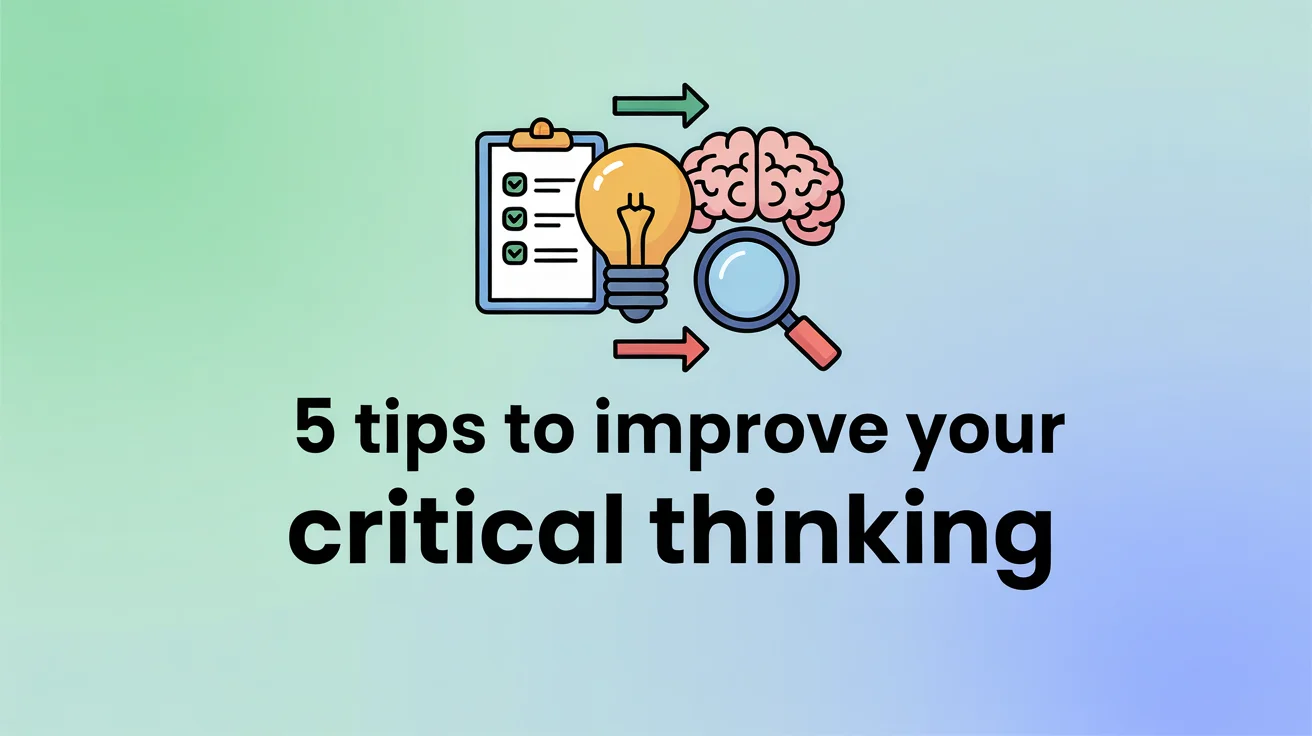
5 Tips to Improve Your Critical Thinking
Every single day, we are surrounded by decisions. Some are small and barely noticeable, while others can have a major impact on our lives. From choosing what to eat to deciding who to vote for, our minds are constantly processing information.
Because of this overload, it’s nearly impossible to make the perfect decision every time. However, there are ways to improve our chances of making smarter, more informed choices. One of the most powerful methods is critical thinking.
Critical thinking helps us break down situations, recognize hidden influences like bias or manipulation, and make decisions based on logic rather than emotions.
Understanding Critical Thinking
Critical thinking is a structured way of approaching questions and problems. Instead of accepting information because it sounds convincing or feels right, critical thinkers analyze all available options carefully.
The word “critical” may sound negative, but it actually refers to careful judgment. A critical thinker applies skepticism, asks questions, and examines evidence before accepting a conclusion.
This process helps eliminate unreliable information and focus only on what is useful and trustworthy.
Why Critical Thinking Is Important in Daily Life
We are constantly bombarded with claims, promises, and opinions. Some examples include:
- Political promises during elections
- Diet trends that guarantee fast results
- Emails or messages claiming instant financial success
Without critical thinking, it’s easy to fall for misleading information. With it, we learn to pause, analyze, and decide more responsibly.
A Simple Five-Step Critical Thinking Process
There are many ways to practice critical thinking, but one effective and practical approach is a five-step process that can be applied to almost any situation.
Step 1: Formulate Your Question Clearly
The first step is understanding what you are really trying to decide. This may sound simple, but it often isn’t.
For example, if you’re considering trying a new diet, your real goal might be weight loss, better nutrition, or increased energy. Marketing claims like “results in two weeks” can distract you from your actual objective.
Clarifying your question helps you focus on what truly matters and filter information more effectively.
Step 2: Gather Relevant Information
Once you know what you’re looking for, the next step is gathering information. There is an overwhelming amount of data available, so having a clear question helps you decide what is relevant.
You might consult experts, read research, or listen to personal experiences. In the case of a diet decision, you could seek advice from nutrition professionals or people who have tried similar approaches.
This step allows you to compare options and move closer to an informed decision.
Step 3: Apply the Information Critically
Gathering information isn’t enough. You must evaluate it by asking important questions such as:
- What assumptions are being made?
- Is this information logical and supported by evidence?
- Am I interpreting it correctly?
For example, if you receive an email promising millions of dollars, it’s important to question whether the claims are realistic and supported by facts.
This step helps separate logic from wishful thinking.
Step 4: Consider the Implications
Every decision has consequences, both short-term and long-term. Critical thinking requires you to look beyond immediate benefits.
Imagine choosing a political candidate because they promise cheaper fuel prices. While that may seem beneficial at first, it could lead to increased fuel usage and environmental damage over time.
Considering implications helps you avoid unintended consequences and think more responsibly.
Step 5: Explore Other Points of View
Even when you strongly disagree with an opposing perspective, it’s valuable to understand why others support it.
Exploring alternative viewpoints can reveal insights you may have overlooked. It also helps you reassess your own beliefs and evaluate whether your reasoning is balanced and fair.
This step leads to more open-minded and informed decisions.
How Critical Thinking Improves Decision-Making
This five-step process won’t eliminate difficult choices from life, but it can significantly improve the quality of decisions you make.
Critical thinking enables you to:
- Identify bias and manipulation
- Evaluate evidence objectively
- Understand multiple perspectives
- Make decisions aligned with your real goals
Over time, it increases the number of positive and rational choices in your life.
Final Thoughts
Critical thinking is a powerful tool in a world full of information and influence. By learning how to question, analyze, and evaluate situations carefully, you gain greater control over your decisions.
If more people consistently applied critical thinking, it could lead to better personal choices, healthier discussions, and a more reasonable society overall.

Allen Haggard
Allen Haggard, a Critical Thinking Expert and Educator, created CriticalThinkingExercises.net to help students, teachers, and professionals improve their analytical, logical, and decision-making skills through guided exercises and practical lessons.