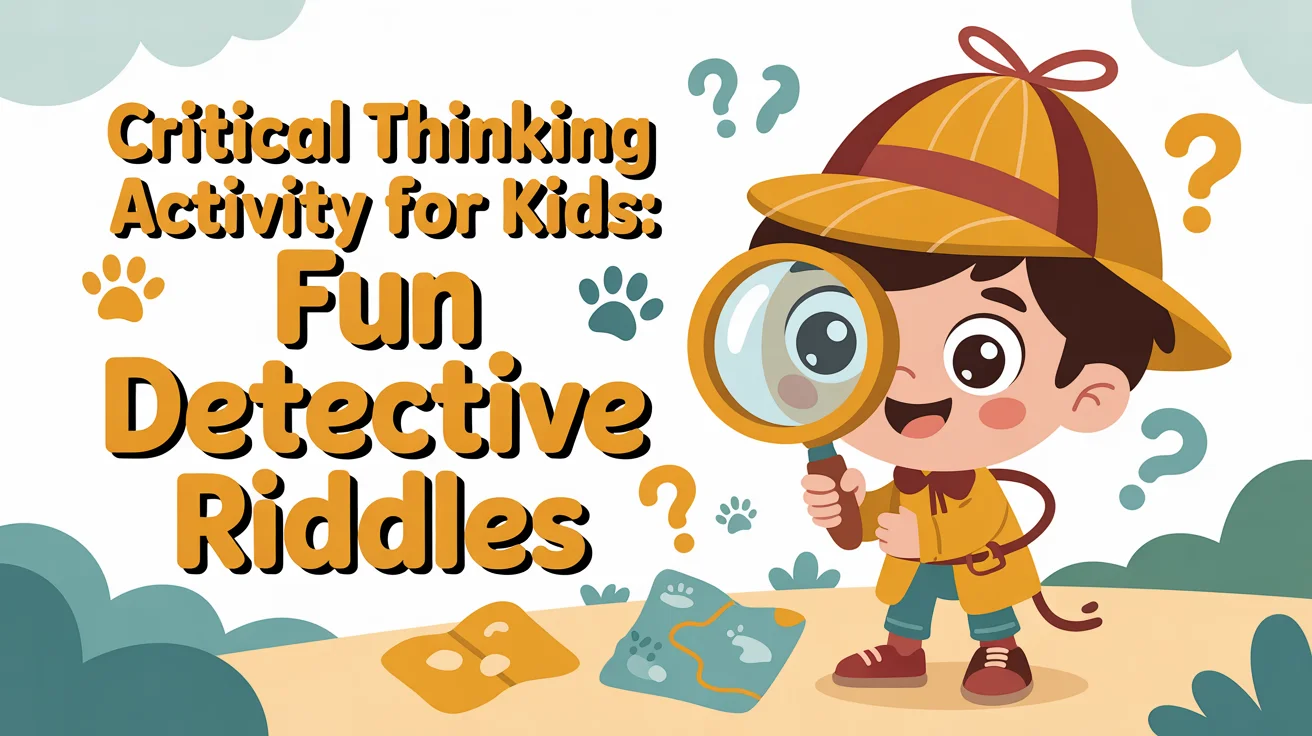
Critical Thinking Activity for Kids: Fun Detective Riddles
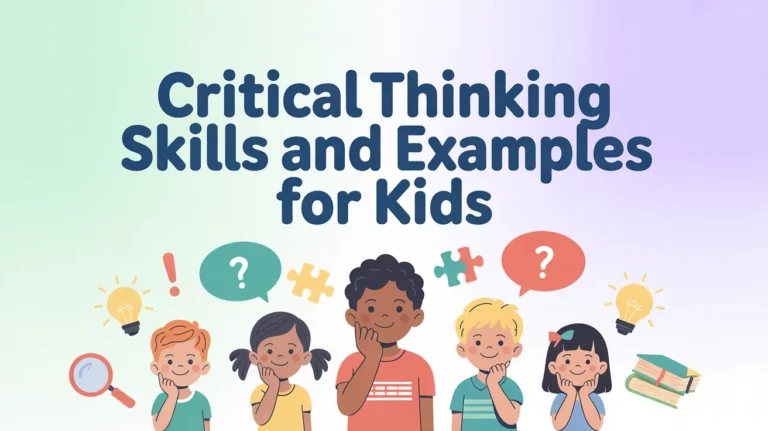
Welcome to a world of detective adventures and brain-teasing riddles! Imagine yourself as a brilliant detective, just like Sherlock Holmes or Nancy Drew. You’ll need to observe carefully, connect the dots, and think outside the box. These activities are perfect for kids to develop critical thinking skills, problem-solving, and creativity while having fun.
Grab your magnifying glass, sharpen your wits, and let’s dive into some exciting riddles and mysteries!
Riddle 1: Three Men in the Ocean
Riddle: Three men were swimming in the ocean. The ocean guard called them to stay away during high tides. Only two men’s hair was wet. What happened to the third man?
Answer: The third man was bald.
Riddle 2: The Teacher’s Mystery
Riddle: On the first day of school, a teacher was attacked and left unconscious. Four teachers were questioned:
- Mr. Ben: “I was organizing my office.”
- Miss Lucy: “I was driving to school and was late.”
- Mr. Nate: “I was checking English exam papers.”
- Miss Susan: “I was having coffee in the teacher’s lounge.”
Answer: Mr. Nate is the culprit. It was the first day of school, so he couldn’t be checking exam papers.
Riddle 3: Rooster Eggs
Riddle: If you buy a rooster expecting three eggs per day for breakfast, how many eggs will you have after three weeks?
Answer: Zero – roosters do not lay eggs.
Riddle 4: Make Seven Even
Riddle: How do you make the number seven even without addition, subtraction, multiplication, or division?
Answer: Drop the “S” from seven, and it becomes even.
Riddle 5: The Curious Case of the Missing Cupcakes
Riddle: Robert baked strawberry cupcakes over the weekend. Two cupcakes went missing. When questioned:
- Amanda: “I was picking up supplies.”
- Mark: “I was organizing the pantry.”
- Lily: “I didn’t see any cupcakes.”
Answer: Lily ate the cupcakes. She knew the flavor, but she wasn’t supposed to know that they were strawberry.
Riddle 6: The Midnight Train
Riddle: A train leaves the station at midnight. It travels at a constant speed but stops after an hour. The tracks are clear, and the train isn’t broken.
Answer: The train stopped at its destination.
Riddle 7: Sunday Murder Mystery
Riddle: Melissa was killed on a Sunday morning. Roommates testified:
- Agnes: “I was getting the mail.”
- Angela: “I was doing laundry.”
- Lucy: “I was cooking.”
- Daniel: “I was planting in the garden.”
Answer: Agnes killed Melissa. No mail is delivered on Sunday, so her story was false.
Riddle 8: Spot the Difference
Activity: Can you spot the differences in a picture in just 15 seconds? This classic game trains observation and attention to detail.
Riddle 9: The Wilsons’ Robbery
Riddle: The Wilsons returned from a weekend trip to find their house robbed. Last people at the house:
- Bob the Cable Guy
- Sam the Gardener
- Tom the Delivery Man
The CCTV caught a blurry face, but the thief’s outfit matched one of them.
Answer: Bob the Cable Guy – his knit cap and shoes matched the CCTV footage.
Why Critical Thinking Activities Are Important for Kids
These riddles and detective challenges are not just fun—they improve essential skills:
- Observation and attention to detail
- Logical reasoning and deduction
- Problem-solving and creativity
- Decision-making and analytical thinking
Practicing these activities helps kids develop a sharp mind and prepares them for real-world challenges.
FAQs – Critical Thinking for Kids
What is critical thinking for kids?
Critical thinking is the ability to analyze, reason, and solve problems effectively using logic and creativity.
Are detective riddles suitable for all children?
Yes! They are fun for kids of all ages, from elementary to middle school.
How often should kids practice critical thinking activities?
Even 5–10 minutes a day of puzzles or riddles can improve their reasoning skills over time.
What other activities help improve critical thinking in kids?
Logic puzzles, math games, memory challenges, and problem-solving tasks are great for developing critical thinking.
Can riddles improve academic performance?
Yes! Regular practice enhances analytical skills, focus, and problem-solving, which are useful in all subjects.

Allen Haggard
Allen Haggard, a Critical Thinking Expert and Educator, created CriticalThinkingExercises.net to help students, teachers, and professionals improve their analytical, logical, and decision-making skills through guided exercises and practical lessons.